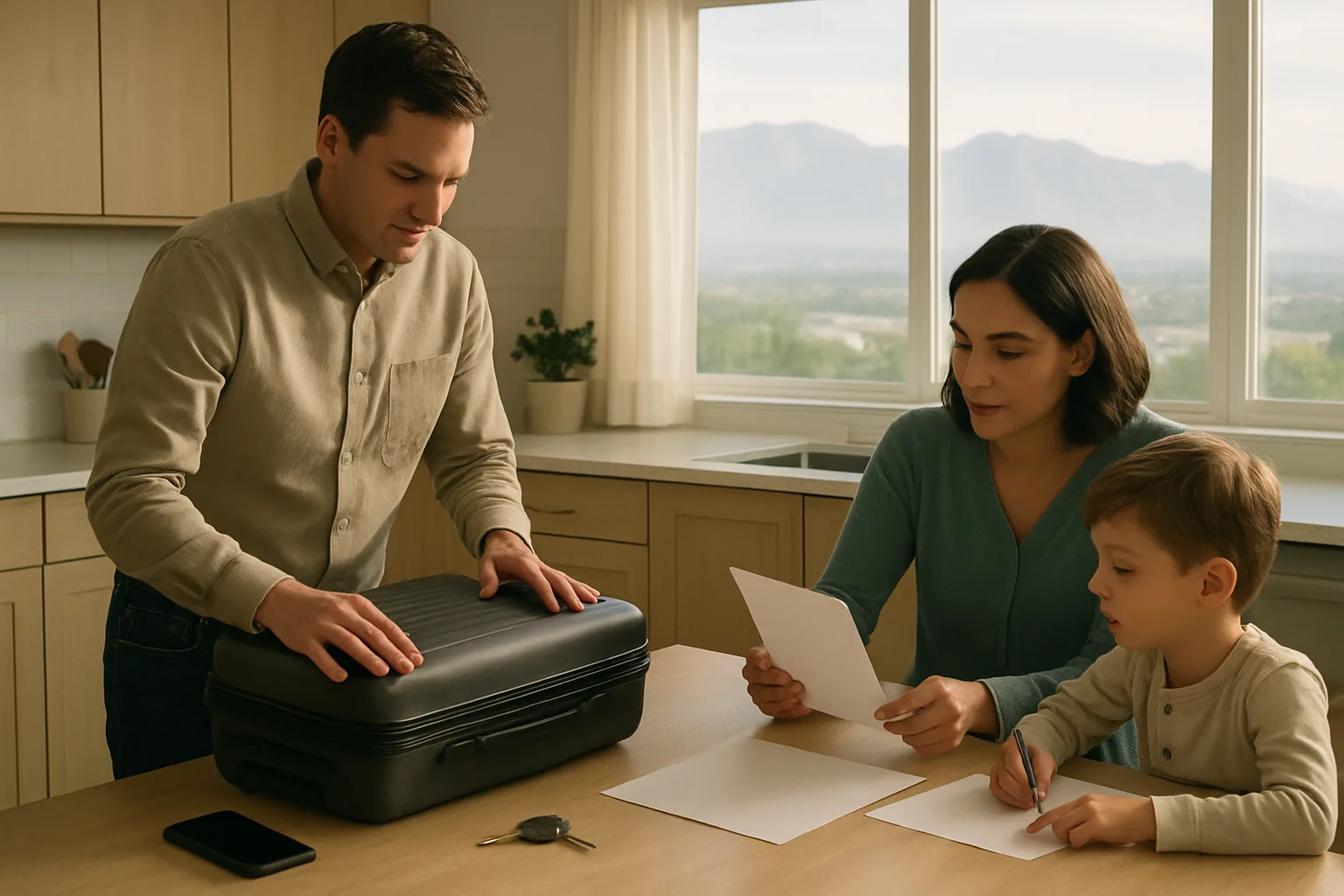
A parent does not have to be gone for months for a family to face a continuity problem. A delayed flight, work assignment in another state, military duty, remote employment, or an unexpected medical emergency can leave a child’s caregiver asking practical questions: Who may pick up the child? Where are medication and insurance details? Who can pay urgent bills? What happens if the parent cannot be reached?
That is why estate planning for traveling parents in Utah should address daily caregiving and emergency access, not only what happens after death. A coordinated plan can give trusted people clearer instructions while preserving the parent’s legal rights. Families in Salt Lake City and West Valley may benefit from reviewing their documents with a Salt Lake City estate planning lawyer before the next trip or extended assignment.
This guide explains a practical continuity plan covering emergency contacts, temporary caregiving, financial access, medical information, school authorization, document storage, and longer-term planning. Stephen J. Buhler can help families identify issues that may require both estate-planning and family-law analysis.
Estate Planning for Traveling Parents in Utah: Start With a Continuity Map
A useful plan begins by identifying what could happen if the parent is unavailable for a few hours, several days, or an extended period. Those situations may require different people and different documents. A neighbor who can respond to a school call may not be the right person to manage finances or make health-care decisions for the parent.
Identify roles before an emergency
Generally speaking, parents may want to consider separate people for these roles:
- Emergency contact: The person the school, child-care provider, or family member calls first.
- Temporary caregiver: The trusted adult who can provide daily supervision if the parent is away.
- Financial agent: The person who may handle authorized financial tasks for the parent, depending on the document’s terms.
- Health-care agent: The person designated to participate in health-care decisions for the parent if the parent cannot do so.
- Successor caregiver: The person the parent hopes will provide care if the parent dies or cannot resume parenting for a prolonged period.
These roles may be filled by one person or several people. The important point is coordination. Each person should understand the limits of their role, where documents are stored, and whom to contact for questions.
Make the plan workable in Salt Lake City and West Valley
A plan should reflect the child’s actual routine. Include school or day-care information, transportation arrangements, extracurricular contacts, allergies or medications, insurance details, and the names of adults already known to the child. A family in Salt Lake City, Utah, may need a different arrangement from one in West Valley, Utah, especially if the caregiver lives in another county or the child attends school near a different household.
A legal review can help distinguish informal instructions from documents that may provide authority. It can also identify conflicts between a will, a parenting plan, powers of attorney, and beneficiary designations.

Coordinating Financial, Medical, and School Access While Away
Continuity planning is not the same as giving another person unlimited control. Each document should be evaluated for its purpose, scope, timing, and interaction with other documents. Utah law governs many estate-planning and family-law questions for Utah residents, but laws and institutional policies can vary by location and may change since publication.
Financial access for household needs
If a parent is unreachable, ordinary obligations may continue. Rent or mortgage payments, utilities, child-care costs, insurance premiums, and travel-related expenses may need attention. A properly prepared Utah financial power of attorney may address who can handle specified financial matters for the parent, subject to the document’s terms and applicable law.
Parents should make a private inventory of recurring bills, account contacts, property information, and important deadlines. They should avoid sharing passwords casually and should ask an attorney about the safest way to provide access. Financial authority for the parent is not automatically the same as authority to make custody or parenting decisions for a child.
Medical information and decision-making
A traveling parent should also organize medical contacts, medications, insurance information, allergies, preferred providers, and relevant treatment instructions. A Utah advance health care directive may identify a person to participate in health-care decisions for the parent if the parent cannot communicate, depending on the directive and applicable Utah law.
The child’s caregiver may need a separate medical-release document or authorization for routine care. Parents should confirm what the child’s physician, insurer, school, or camp will accept. Because forms and provider requirements differ, an attorney may help coordinate the documents without assuming that one form answers every situation.
School and child-care authorization
A school or child-care provider may ask for written authorization identifying who may pick up the child or receive information. That authorization can be narrower than a custody order or a broader caregiving arrangement. Parents should provide current contact information and update the school when a caregiver, address, or travel schedule changes.
For questions involving an existing parenting plan, extended absences, or disputes about caregiving, a Utah custody lawyer can help explain how family-law issues may affect the continuity plan.
Common Gaps in a Traveling Parent’s Backup Plan
Many families have some documents but no system for using them. A parent may have a will in a safe, for example, while the child’s caregiver has no emergency contact list or cannot locate the health-insurance information. Reviewing the entire plan can reveal gaps before an urgent situation occurs.
Common problems include:
- Naming only one caregiver. The first choice may be unavailable, out of town, or unable to accept responsibility. A backup and successor choice can make the plan more resilient.
- Relying on a will for immediate care. A will generally addresses property after death and may not provide the day-to-day authorization a caregiver or school needs during travel.
- Failing to discuss the plan. A named caregiver may not know the parent’s wishes, the child’s routine, or the location of essential records.
- Using outdated documents. Marriage, divorce, a new child, a move, military orders, or a change in the parent’s relationship with a caregiver may require review.
- Storing everything in one inaccessible place. Keep originals and copies according to the attorney’s instructions, and make sure appropriate people know how to locate them.
- Overlooking the permanent contingency. If a parent dies or remains unavailable for a prolonged period, custody, guardianship, parentage, and inheritance questions may intersect. A will expresses wishes, but it does not automatically decide every custody question. Families can review Utah custody planning if a parent dies as part of a broader plan.
Military parents and parents working across state lines may have additional administrative requirements. Documents prepared in one jurisdiction may not address every issue arising elsewhere. A periodic review with counsel familiar with Utah law can help a parent evaluate whether the plan still matches the family’s circumstances.
Frequently Asked Questions
Does a Utah parental power of attorney automatically transfer custody of my child?
Not necessarily. A power of attorney or caregiver authorization may address specific responsibilities, but its effect depends on the document, the circumstances, and applicable Utah law. It may not replace a custody order, determine long-term guardianship, or override another parent’s legal rights. Parents considering a parental power of attorney for a child in Utah may benefit from reviewing the proposed document and any existing parenting arrangements with a qualified attorney.
What documents should a traveling parent keep available for a child’s caregiver?
The appropriate set varies, but many families organize emergency contacts, school and child-care authorizations, medical information, insurance details, medication instructions, travel information, and copies of relevant custody or parentage records. Estate-planning documents may include powers of attorney and health-care directives for the parent. The caregiver should know where current documents are stored and how to reach the parent’s attorney without receiving unnecessary private information.
Should military parents use the same estate plan as other Utah parents?
Military service can create extended absences, changes in location, and limited communication. The core continuity topics are similar, but service-related documents, assignments, and benefit arrangements may require additional review. A Utah attorney can help evaluate how the parent’s estate plan, family-law documents, and beneficiary designations fit together. Parents should also confirm whether institutions require particular forms or current copies.
How often should a parent who works away from home review the plan?
There is no universal review schedule for every family. A review may be appropriate after a move, marriage, divorce, birth or adoption, change in caregiver, major financial change, military assignment, or change in the child’s school or medical needs. Even without a major event, parents may periodically confirm that contact information, authorizations, account instructions, and document storage arrangements remain current under Utah law.
How Stephen J. Buhler Can Help
Stephen J. Buhler is dedicated to helping Utah parents think through the legal documents and practical instructions that support family continuity. The firm can evaluate how estate-planning documents, financial authority, health-care directives, school authorizations, and custody concerns may fit together for a parent who travels or works away from home.
For families in Salt Lake City, West Valley, and nearby Utah communities, the process can begin with a review of current documents, travel or work circumstances, caregiver choices, and likely emergency scenarios. Contact Stephen J. Buhler to schedule a consultation and discuss a plan tailored to your situation. An attorney can explain available options without assuming that one document will solve every family-law or estate-planning issue.
The information in this article is for educational purposes only and does not constitute legal advice. Contact a qualified attorney licensed in Salt Lake City, Utah; West Valley, Utah for advice specific to your situation.